

Table of Contents
ToggleA clean home isn’t just about appearances, it’s about creating a functional, healthy space where you can actually find things. But let’s be real: remembering every task, from dusting ceiling fans to descaling the showerhead, is nearly impossible without a system. That’s where a printable cleaning list comes in. It’s not about perfection or turning cleaning into a personality trait: it’s about having a roadmap that keeps the chaos at bay without eating your entire weekend. Whether you’re juggling a full-time job, managing a household, or just trying to stay ahead of dust bunnies, a well-organized cleaning checklist takes the guesswork out of maintenance.
Key Takeaways
- A house cleaning list printable eliminates decision fatigue and mental load by providing a clear roadmap for tasks instead of relying on memory to remember what needs cleaning.
- Breaking cleaning tasks into daily (15-30 min), weekly (2-3 hours), and monthly/seasonal categories prevents overwhelming deep-clean marathons and maintains consistent home order.
- Customizing your printable cleaning checklist based on your home’s specific features, square footage, and household needs makes it a practical tool you’ll actually use rather than a generic template.
- Using visible, tangible lists with checkboxes on your fridge or clipboard provides motivation and helps you track progress, while also clarifying responsibilities if multiple people share cleaning duties.
- Time-blocking related tasks and checking items off creates efficiency and satisfaction, while regularly reviewing and adapting your list quarterly keeps it relevant as your household changes.
Why You Need a House Cleaning List Printable
A printable cleaning list does one thing really well: it offloads mental work. Instead of scanning your house each week wondering what needs attention, you’ve got a reference that tells you exactly what to tackle and when. This isn’t about being obsessive, it’s about efficiency.
First, it creates consistency. When cleaning tasks are written down, they actually get done. No more “I’ll remember to clean the baseboards next time” that turns into six months of dust accumulation. A physical checklist you can see, whether it’s stuck to the fridge or clipped to a clipboard, serves as both reminder and accountability.
Second, it prevents overwhelming deep-clean marathons. By breaking tasks into daily, weekly, and monthly categories, you’re spreading the workload instead of spending an entire Saturday scrubbing. Fifteen minutes of daily maintenance beats a four-hour panic-clean before guests arrive.
Third, it helps divide labor if you’re not cleaning solo. A printed list makes it crystal clear who’s responsible for what. No arguments about whether someone “forgot” or “didn’t realize” the bathroom needed cleaning, it’s right there in writing.
Finally, printable lists adapt to your home’s specific needs. A 900-square-foot apartment has different demands than a 2,500-square-foot house with kids and pets. Once you customize and print your list, it becomes a permanent reference tailored to your space, not some generic template that doesn’t match your reality.
What to Include in Your House Cleaning List
A comprehensive cleaning list breaks tasks into three tiers: daily maintenance, weekly upkeep, and deeper monthly or seasonal projects. Here’s what actually belongs in each category, based on what keeps a home functional rather than show-home perfect.
Daily Cleaning Tasks
Daily tasks are the ones that prevent small messes from becoming big problems. These should take 15-30 minutes total, if your daily list requires an hour, you’ve misclassified tasks.
Essential daily items:
- Make beds. Takes two minutes per bed and instantly makes bedrooms look pulled together.
- Wipe down kitchen counters and sink. After meals, a quick wipe prevents sticky buildup and discourages pests.
- Load and run the dishwasher or wash dishes. Leaving dishes overnight invites odors and fruit flies.
- Sweep or spot-vacuum high-traffic areas. Entryways, kitchens, and under dining tables collect the most debris.
- Do a quick pickup. Spend five minutes returning items to their spots, remote controls, shoes, mail, toys.
- Wipe bathroom sinks and counters. Toothpaste and soap scum are easier to clean fresh than dried.
- Take out trash if full. Don’t wait for overflow or smells.
These aren’t about deep cleaning. They’re about maintaining baseline order so weekly tasks don’t compound. Skip a few days and you’ll notice the difference.
Weekly Cleaning Tasks
Weekly tasks address areas that accumulate grime or clutter over several days. Many people block out a two-to-three-hour window on weekends, but splitting tasks across weeknights (15-20 minutes each) can make this more manageable, especially with the help of basic cleaning strategies that keep surfaces ready for the next round.
Core weekly checklist:
- Vacuum and mop all floors. Depending on square footage and flooring type, this can take 30-60 minutes. Hardwood, tile, and luxury vinyl plank (LVP) need different approaches, tile can handle a wet mop, but engineered hardwood requires a damp microfiber mop to avoid water damage. If you’re dealing with multiple floor types, a combination tool like a steam mop with swappable pads or a versatile floor cleaning machine can streamline the process.
- Clean all bathrooms thoroughly. Scrub toilets (inside and out, including the base and bolts), sinks, tubs, showers, and mirrors. Use a bathroom-specific cleaner or a 1:1 vinegar-water solution for soap scum. Don’t skip grout lines, mildew starts there.
- Dust surfaces, ceiling fans, and vents. Use a microfiber cloth or extendable duster. Ceiling fans collect surprising amounts of dust, which gets flung around when you turn them on.
- Wipe down kitchen appliances. Exterior of the fridge, microwave (inside and out), stovetop, and oven door. Grease splatters are easier to remove with a degreasing spray and a bit of elbow grease.
- Change bed linens. Wash sheets, pillowcases, and any blankets in contact with skin. Most manufacturers recommend weekly washing to control dust mites and allergens.
- Empty all trash and recycling bins. Replace liners and wipe down bin interiors if they’re sticky or smelly.
- Spot-clean walls and light switches. Fingerprints, scuffs, and grime show up fast, especially around doorways.
Weekly cleaning keeps the home consistently presentable. It’s the backbone of any house cleaning routine, and it’s where a printed list really shines, you can check off tasks as you go, which is oddly satisfying.
Monthly and Seasonal Deep Cleaning Tasks
Monthly and seasonal tasks tackle the stuff you don’t see every day but that affects air quality, safety, and long-term maintenance. These often take 30 minutes to an hour per task, so spread them out, don’t try to knock out the whole list in one weekend.
Monthly deep-clean tasks:
- Vacuum or dust baseboards and molding. Use a vacuum with a brush attachment or a damp cloth.
- Clean inside the oven. Use a commercial oven cleaner or a baking soda paste (1/2 cup baking soda + 3 tablespoons water). Let it sit overnight, then scrub and wipe clean.
- Descale faucets and showerheads. Mineral buildup reduces water pressure. Remove aerators and showerheads, soak in white vinegar for 30 minutes, scrub, and reinstall.
- Wipe down cabinet fronts and hardware. Kitchens and bathrooms accumulate grease and grime on cabinet surfaces.
- Vacuum upholstery and under cushions. Crumbs, pet hair, and dust accumulate fast. Use the upholstery attachment on your vacuum.
- Wash or replace HVAC filters. Check your system’s filter monthly. Most 1-inch pleated filters need replacing every 30-90 days depending on household conditions (pets, allergies, etc.).
- Clean out the refrigerator. Toss expired items, wipe down shelves and drawers, and check door seals for gunk.
Seasonal deep-clean tasks (every 3-6 months):
- Wash windows inside and out. Use a squeegee and a solution of dish soap and water. Clean screens and sills too.
- Deep-clean carpets and rugs. Rent a carpet cleaner or hire a professional cleaning service if you have wall-to-wall carpeting. High-traffic areas benefit from this twice a year.
- Clean dryer vents and ducts. Lint buildup is a fire hazard. Disconnect the vent, vacuum it out, and check the exterior vent cap for blockages.
- Wipe down light fixtures and bulbs. Dust reduces light output by up to 30%.
- Declutter and organize storage areas. Garages, basements, and closets accumulate items you no longer use. Donate, sell, or toss.
- Power-wash exterior surfaces. Driveways, siding, decks, and patios. Rent a pressure washer if you don’t own one (1,500-2,000 PSI is sufficient for most residential use).
Seasonal tasks align well with the changing needs of your home, cleaning gutters in fall, checking caulking around windows before winter, power-washing decks in spring. Matching tasks to seasons keeps them from feeling arbitrary.
How to Customize Your Printable Cleaning Checklist
Generic cleaning templates are a starting point, but they won’t fit every home. Customizing your printable list makes it a tool you’ll actually use instead of one that collects dust on the counter.
Start by mapping your home. List every room and high-traffic area: kitchen, bathrooms (note how many), bedrooms, living areas, laundry room, garage, entryways. Each space has unique cleaning needs. A home office needs dusting and vacuuming, but not the scrubbing a bathroom requires.
Adjust task frequency based on use. If you work from home and cook three meals a day, your kitchen needs daily attention. If you rarely use a guest bathroom, weekly cleaning might be overkill, biweekly or monthly could suffice. Similarly, homes with pets or kids will need more frequent vacuuming and spot-cleaning than a couple with no animals.
Account for your home’s specific features. Got hardwood floors? Add “dust-mop or dry-mop daily” to prevent grit from scratching the finish. Have a tile backsplash? Weekly wipe-downs prevent grease buildup. Own a ceiling fan in every room? Monthly dusting goes on the list. High ceilings? You’ll need an extendable duster or a step ladder.
Break tasks into time blocks if needed. Some people prefer one cleaning session per week: others like spreading tasks across days. You can create separate printable pages for each day (“Monday: bathrooms,” “Tuesday: vacuum and mop”) or a master weekly list you work through at your own pace. Both approaches work, pick what matches your schedule.
Add seasonal or annual reminders. These are easy to forget. Include notes like “check smoke detector batteries (biannual),” “flip or rotate mattresses (quarterly),” or “clean out pantry and check expiration dates (every 6 months).” These don’t fit neatly into daily or weekly lists, but they’re critical for home maintenance.
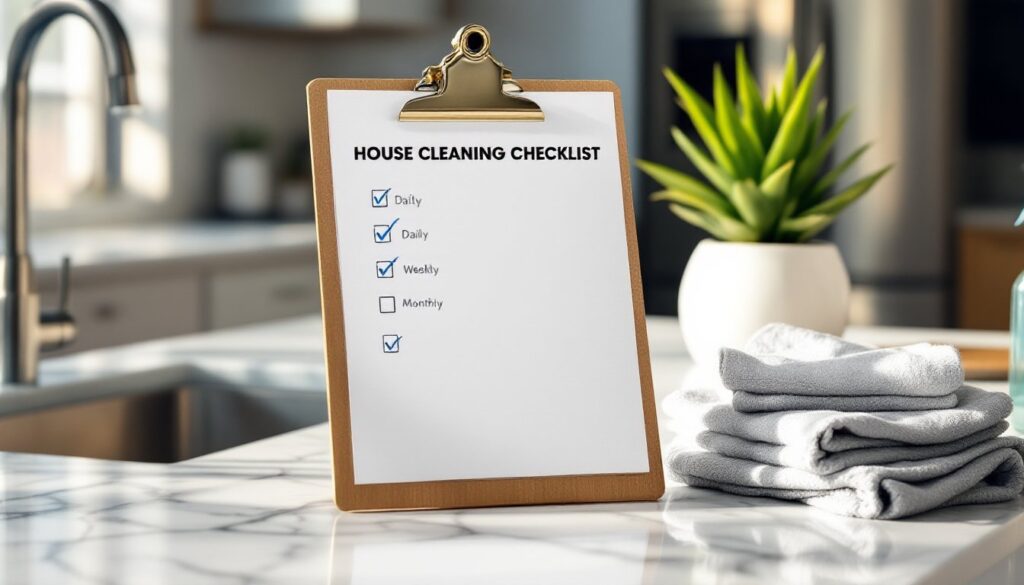
Design for visibility and usability. Use a simple word processor or spreadsheet to create your list. Bold headings for each category (Daily, Weekly, Monthly). Use checkboxes or blank squares next to each task. Print on cardstock for durability, laminate it, and use a dry-erase marker for repeat use, or print fresh copies weekly and stick them on a clipboard. The goal is a reference you can glance at mid-cleaning without scrolling through your phone.
If you want a head start, established cleaning schedules offer structured templates you can modify to suit your home’s layout and needs.
Tips for Using Your House Cleaning List Effectively
Printing a list is step one. Actually using it, and making it work long-term, requires a few practical habits and a bit of honesty about what’s realistic for your household.
Keep it visible. Tuck it in a drawer and it’s useless. Stick it to the fridge, clip it inside a kitchen cabinet door, or mount it on a bulletin board near your cleaning supplies. If multiple people share cleaning duties, visibility ensures everyone’s on the same page.
Check off tasks as you complete them. This sounds obvious, but the physical act of checking a box provides a small dopamine hit and helps you track what’s left. If you’re using a laminated reusable list, a dry-erase marker works perfectly. For paper copies, a pen or pencil is fine.
Time-block instead of multitasking. It’s tempting to jump between tasks, wipe a counter, toss in laundry, vacuum a room, but you’ll lose efficiency. Pick a section of your list, set a timer, and knock out related tasks in one go. Cleaning all bathrooms back-to-back is faster than doing one bathroom, stopping, then coming back later.
Stock up on the right tools and products. A cleaning list is only as good as your ability to execute it. Keep essentials on hand: all-purpose cleaner, glass cleaner, disinfectant, microfiber cloths, scrub brushes, vacuum bags or filters, mop heads, and trash bags. Running out mid-clean kills momentum. Store supplies in a caddy or bucket so you can carry everything room to room.
Delegate and rotate tasks. If you live with others, assign specific tasks or rotate weekly responsibilities. A printed list makes delegation transparent, no one can claim they “didn’t know” what needed doing. Kids as young as 5-7 can handle light tasks like putting away toys, wiping tables, or feeding pets. Older kids and teens can vacuum, take out trash, and clean bathrooms with supervision.
Adapt as needed, but don’t skip consistently. Life happens. Some weeks you’ll miss tasks, that’s normal. But if you’re consistently skipping the same items, reassess. Maybe weekly mopping is overkill for your home, or maybe you need to break a big task into smaller chunks. The list should serve you, not stress you out.
Review and update quarterly. Households change. You might adopt a pet, finish a basement renovation, or switch from carpet to hard flooring. Every few months, review your list and tweak it. Remove tasks that no longer apply, add new ones, adjust frequencies. A static list becomes obsolete fast.
Consider hybrid help for big tasks. Not everything belongs on a DIY list. If you have large-scale projects, like post-renovation cleanup, move-in/move-out deep cleans, or homes with significant square footage, sometimes it makes sense to bring in help. Professional services can reset your home to baseline, after which your printable list keeps it maintained. For specific tactics that go beyond standard routines, creative cleaning hacks can help you tackle stubborn problems efficiently.
Track what takes longest. After a few weeks of using your list, you’ll notice which tasks eat the most time. If scrubbing grout takes 45 minutes every week, maybe it’s time to reseal it or switch to a mildew-resistant caulk. If vacuuming stairs is a pain, a handheld vacuum might speed things up. Use the data your list provides to optimize your process.
Finally, remember that a cleaning list isn’t about maintaining a museum-quality home. It’s about creating a livable, functional space without spending every free hour scrubbing. If your home feels comfortable and you’re not embarrassed when someone drops by unannounced, you’re doing it right. For those seeking even more structure, comprehensive room-by-room guides and expert-backed schedules provide additional frameworks to refine your approach.
A house cleaning list printable is a tool, not a taskmaster. Use it to take control of your home maintenance, reduce decision fatigue, and reclaim your weekends. Print it, customize it, and actually follow it, you’ll notice the difference within a month.